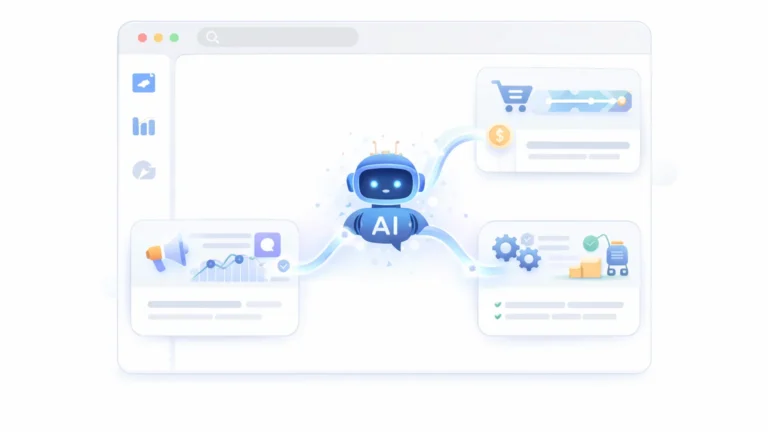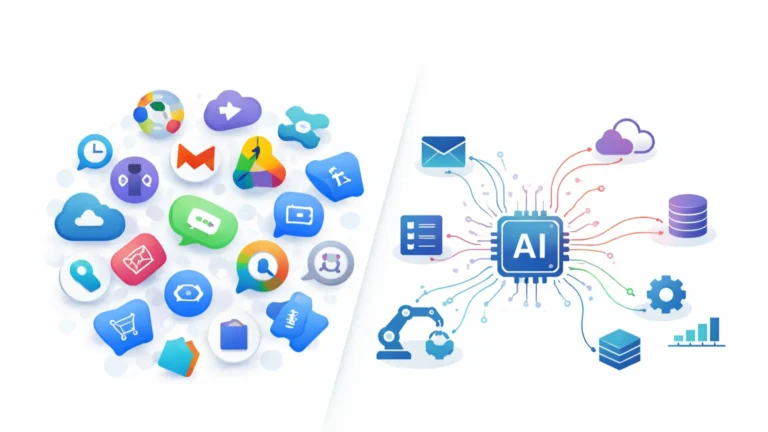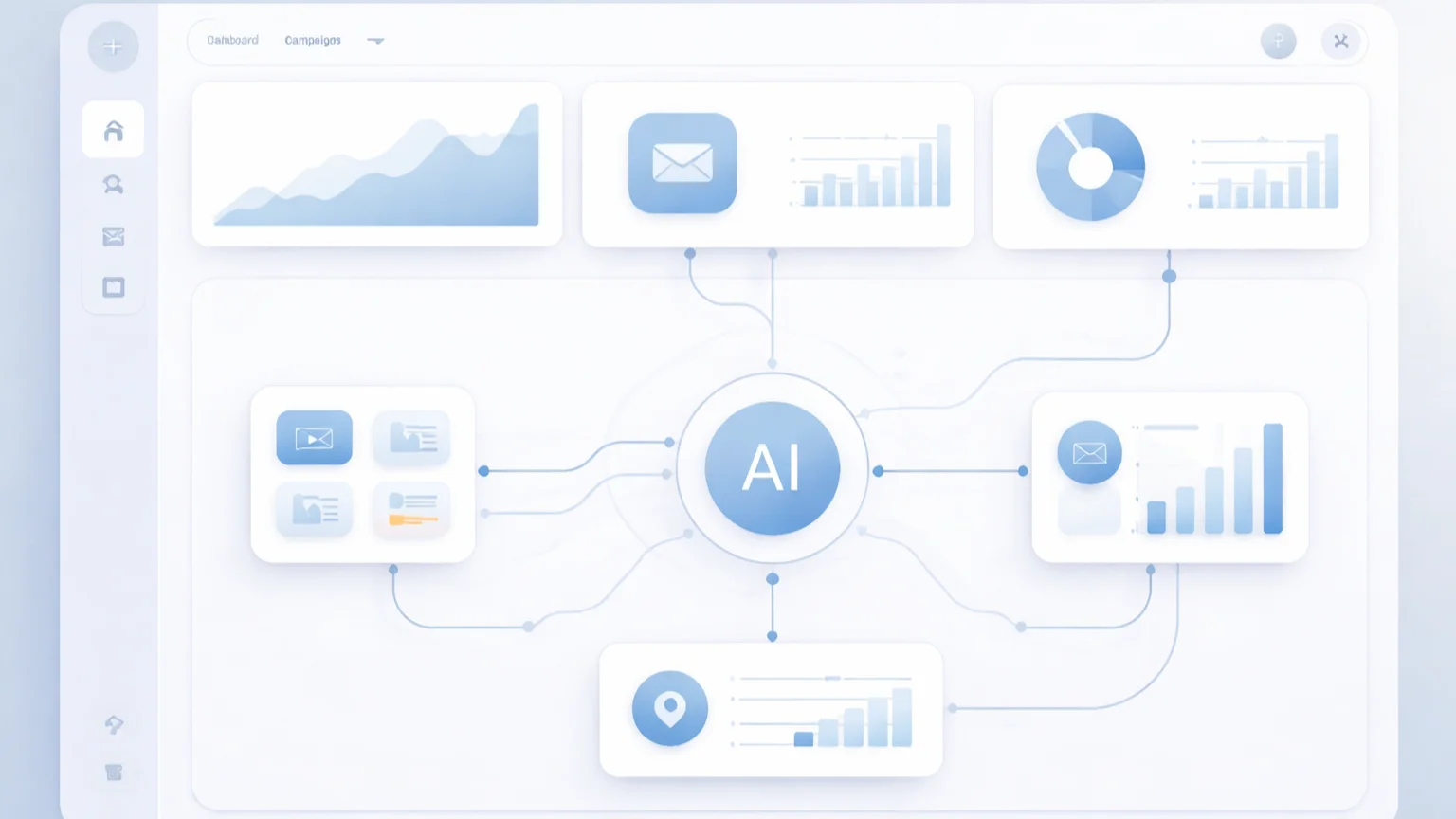

AI marketing tools can automate content, emails, social media, and customer journeys—allowing businesses to grow faster without increasing workload. In 2026, marketing is no longer manual—it’s system-driven.
Most businesses waste time on repetitive marketing tasks.
Writing emails. Scheduling posts. Analyzing data. Managing campaigns.
It adds up quickly.
AI changes that.
With the right tools, you can automate large parts of your marketing—generate content, personalize campaigns, optimize performance, and scale results without hiring more people.
This isn’t about replacing marketers—it’s about increasing efficiency.
In this updated guide, you’ll discover the best AI marketing tools in 2026—organized by real use cases like content, email, social media, SEO, and automation—plus how to combine them into a complete marketing system.
What Are AI Marketing Tools?
AI marketing tools are software platforms powered by artificial intelligence that help businesses automate, optimize, and scale marketing activities such as content creation, email campaigns, social media management, and customer targeting.
Instead of manually managing every campaign, marketers can use AI to handle repetitive tasks and improve performance with data-driven insights.
What AI Marketing Tools Actually Do
Modern AI tools support different parts of the marketing workflow:
- Content creation: Generate blog posts, ads, and marketing copy
- Email marketing: Automate campaigns and personalize messages
- Social media: Schedule posts and generate captions
- SEO optimization: Improve rankings using keyword and content analysis
- Automation: Connect tools and streamline workflows
Each tool focuses on a specific function—but together, they form a complete marketing system.
Examples of Popular AI Marketing Tools
- HubSpot → all-in-one marketing automation
- Jasper AI → content and ad copy generation
- Mailchimp → email marketing automation
- Surfer SEO → SEO optimization and content strategy
These tools don’t replace marketers—they enhance productivity by removing repetitive work and improving decision-making.
The Real Advantage
The biggest benefit of AI marketing tools is efficiency and scalability.
- Automate repetitive tasks
- Improve targeting and personalization
- Increase campaign performance
- Scale marketing without increasing costs
Instead of managing every detail manually, marketers can focus on strategy, creativity, and growth.
Why AI Is Changing Marketing
Marketing is no longer just about creativity—it’s about speed, data, and efficiency.
AI is transforming how businesses attract, convert, and retain customers.
Marketing Demand Has Increased
Businesses today need to create more content than ever:
- Blog posts
- Social media content
- Email campaigns
- Ads and landing pages
Doing all of this manually is time-consuming and difficult to scale.
AI allows marketers to keep up with this demand efficiently.
—
Personalization Is Now Expected
Customers expect personalized experiences.
- Relevant emails
- Targeted ads
- Customized content
AI analyzes user behavior and delivers the right message at the right time.
This improves engagement and conversion rates.
—
Data-Driven Decisions Are Critical
Modern marketing relies on data.
- Campaign performance
- Customer behavior
- Conversion metrics
AI processes large datasets quickly and provides actionable insights.
This helps marketers make better decisions faster.
—
From Manual Tasks to Automated Systems
Traditional marketing involves repetitive work:
- Scheduling posts
- Sending emails
- Tracking performance
AI automates these processes:
- Auto-generate content
- Schedule campaigns
- Optimize performance in real time
This shift from manual work to automated systems is the biggest change.
—
Small Teams Can Scale Faster
AI enables small businesses and teams to compete with larger companies.
- Automate marketing tasks
- Reduce workload
- Increase output
This creates a significant competitive advantage.
—
The Real Shift: Marketing Leverage
AI gives marketers leverage.
- More campaigns with less effort
- Better targeting with less guesswork
- Faster growth without increasing costs
Businesses that adopt AI early can scale faster and outperform competitors.
10 Best AI Marketing Tools (By Use Case)
Not all AI marketing tools serve the same purpose. The best tools are designed for specific parts of the marketing workflow—content, email, social media, SEO, and automation.
1. Jasper AI – Content & Copywriting
Best for: Blog posts, ads, email copy
Jasper AI helps marketers generate high-quality content quickly, including sales pages and ad copy.
Why it stands out: Optimized for marketing language and conversions.
—
2. ChatGPT – Content & Strategy Assistant
Best for: Ideas, scripts, marketing strategy
ChatGPT can generate content, brainstorm campaigns, and assist with marketing planning.
Why it stands out: Flexible and useful across all marketing tasks.
—
3. HubSpot AI – All-in-One Marketing Automation
Best for: CRM, email automation, lead management
HubSpot combines marketing, sales, and customer management into one platform.
Why it stands out: Complete marketing system with automation workflows.
—
4. ActiveCampaign – Email Marketing Automation
Best for: Email campaigns and customer journeys
ActiveCampagn uses AI to personalize email sequences and automate engagement.
Why it stands out: Advanced automation and behavioral targeting.
—
5. Mailchimp AI – Beginner-Friendly Email Marketing
Best for: Small businesses and beginners
Mailchimp uses AI to optimize subject lines, send times, and audience segmentation.
Why it stands out: Easy to use with strong automation basics.
—
6. Hootsuite AI – Social Media Management
Best for: Scheduling and managing social content
Hootsuite helps automate social media posting and analyze engagement.
Why it stands out: Multi-platform management in one place.
—
7. Canva AI – Design & Visual Content
Best for: Graphics, ads, social visuals
Canva AI allows marketers to create designs quickly without design skills.
Why it stands out: Simple and powerful visual creation.
—
8. Surfer SEO – SEO Optimization
Best for: Content ranking and keyword optimization
Surfer SEO analyzes competitors and helps optimize content for search engines.
Why it stands out: Data-driven SEO insights.
—
9. Zapier – Workflow Automation
Best for: Connecting apps and automating workflows
Zapier automates repetitive marketing tasks by connecting different tools.
Why it stands out: Thousands of integrations.
—
10. Copy.ai – Quick Marketing Content
Best for: Social media and short-form content
Copy.ai helps generate captions, product descriptions, and ad copy quickly.
Why it stands out: Fast and simple for daily marketing needs.
—
Pro tip: You don’t need all these tools. Choose 2–4 tools based on your marketing workflow—content, email, or automation—and build from there.
Best AI Marketing Stack (System)
Using individual AI marketing tools is helpful—but combining them into a system is what truly drives growth.
The most successful businesses don’t just use tools. They build AI-powered marketing systems.
Minimal Marketing Stack (Best for Beginners)
- ChatGPT → content ideas and copywriting
- Canva AI → visuals and design
This simple setup is enough to start creating content quickly.
—
Growth Marketing Stack (Content + Social + Email)
- Jasper AI → blog posts and ad copy
- Canva AI → visuals and creatives
- Hootsuite → social media scheduling
- Mailchimp → email campaigns
This stack helps businesses build consistent content and engagement.
—
Advanced Marketing Stack (Automation + Scaling)
- HubSpot → CRM and marketing automation
- ActiveCampaign → email workflows and personalization
- Surfer SEO → SEO optimization
- Zapier → workflow automation
This setup is designed for businesses scaling marketing operations.
—
Example Marketing Workflow (Real Use Case)
Here’s how an AI-powered marketing workflow looks:
- Use ChatGPT / Jasper → generate content
- Use Canva AI → create visuals
- Use Hootsuite → schedule posts
- Use Mailchimp → send email campaigns
- Use Zapier → automate workflows
- Use HubSpot → manage leads and customers
This transforms marketing from manual work into an automated system.
—
Keep Your Stack Simple
The biggest mistake businesses make is using too many tools.
- Too many tools = complexity
- Too many subscriptions = higher costs
Start with one workflow—content, email, or automation—and expand gradually.
A simple system that runs smoothly will always outperform a complex one.
How AI Improves Marketing ROI
The biggest reason businesses adopt AI marketing tools isn’t convenience—it’s return on investment (ROI).
AI doesn’t just automate tasks. It improves performance, reduces costs, and increases revenue potential.
Reducing Marketing Costs
Traditional marketing often requires multiple tools and large teams.
- Content writers
- Designers
- Campaign managers
AI can handle many of these tasks:
- Generate content
- Create visuals
- Automate campaigns
Result: Lower operational costs without reducing output.
—
Increasing Campaign Efficiency
AI improves how campaigns perform.
- Optimizes email send times
- Improves ad targeting
- Analyzes performance in real time
This leads to better results with less manual effort.
Result: Higher engagement and conversion rates.
—
Personalization at Scale
Personalized marketing performs better—but it’s difficult to do manually.
AI makes it possible to personalize at scale:
- Tailored emails
- Dynamic content
- Behavior-based targeting
Result: Better customer experience and higher conversions.
—
Saving Time (Hidden ROI)
Time is one of the most valuable resources in marketing.
- Manual work slows campaigns
- Repetitive tasks reduce efficiency
AI reduces time spent on execution.
Result: More time for strategy and growth.
—
Scaling Without Increasing Costs
Traditional growth requires more resources.
AI changes that.
- Run more campaigns
- Create more content
- Reach more customers
All without proportional cost increases.
Result: Higher profit margins as you scale.
—
The Bottom Line
AI improves ROI by increasing output, reducing costs, and optimizing performance at the same time.
For businesses, this means faster growth with fewer resources.
How to Choose the Right AI Marketing Tools
With so many AI marketing tools available, the real challenge isn’t finding tools—it’s choosing the right ones for your business.
The best approach is simple: focus on your marketing goals and workflow.
Start With Your Primary Marketing Channel
Different businesses rely on different channels.
- Content marketing → Jasper AI, ChatGPT, Surfer SEO
- Email marketing → Mailchimp, ActiveCampaign
- Social media → Hootsuite, Canva AI
Choose tools that directly support your main growth channel.
—
Identify Your Biggest Bottleneck
Ask yourself: what takes the most time?
- Writing content → use AI writing tools
- Managing campaigns → use automation tools
- Analyzing data → use AI analytics tools
Fix your biggest bottleneck first for maximum impact.
—
Consider Your Business Size
Your needs will vary depending on your business stage.
- Small businesses: Mailchimp, Canva AI, ChatGPT
- Growing businesses: ActiveCampaign, Jasper AI
- Large teams: HubSpot, Zapier
Choose tools that match your scale.
—
Check Integration Capabilities
Marketing tools are more powerful when they work together.
- Email + CRM + automation
- Content + SEO + analytics
Tools like Zapier help connect everything into a system.
—
Free vs Paid Consideration
Not every tool needs to be paid.
- Free tools → good for testing and learning
- Paid tools → better for scaling and automation
Upgrade only when you need more features or performance.
—
Focus on Simplicity
More tools don’t always mean better results.
- Too many tools = complexity
- Too many features = confusion
The best tools are the ones your team actually uses consistently.
—
Test Before You Commit
Most AI marketing tools offer free trials.
- Test different tools
- Compare results
- Choose what works best
Don’t rely on popularity—focus on performance and usability.
—
Bottom line: The right AI marketing tools are not the most powerful—they’re the ones that fit your workflow and help you grow faster.
Common Mistakes in AI Marketing
AI marketing tools can significantly improve performance—but using them incorrectly can lead to wasted budget, poor results, and inefficient workflows.
Many businesses make the same mistakes when adopting AI.
Avoiding these will help you get better results faster.
1. Relying Too Much on Automation
Automation is powerful—but overusing it can reduce effectiveness.
- Generic emails
- Impersonal content
- Poor customer experience
This issue is hinted in your original article 0, but becomes more critical as automation increases.
Fix: Combine AI automation with human creativity and personalization.
—
2. Using Too Many Tools at Once
More tools don’t mean better marketing.
- Complex workflows
- Higher costs
- Confusing systems
Fix: Start with 2–3 tools and build a simple, effective system.
—
3. Ignoring Data and Analytics
AI tools generate insights—but many businesses don’t use them.
- Ignoring performance metrics
- Not optimizing campaigns
Fix: Regularly review data and adjust strategies based on results.
—
4. Not Defining Clear Goals
Using AI without clear goals leads to poor outcomes.
- No clear KPIs
- Random campaigns
Fix: Define specific goals (traffic, leads, conversions) before using AI tools.
—
5. Overlooking Customer Experience
Automation should improve—not harm—the user experience.
- Spammy emails
- Irrelevant messages
Fix: Focus on delivering value, not just automation.
—
6. Expecting Instant Results
AI improves performance—but results take time.
- Campaign optimization requires testing
- Strategies need refinement
Fix: Test, analyze, and iterate consistently.
—
7. Not Building a Marketing System
Using AI tools randomly leads to inefficiency.
- No structured workflow
- Disconnected tools
Fix: Build a clear system:
- Content → Distribution → Automation → Analysis
This is where AI delivers real growth.
—
Bottom line: AI marketing tools are powerful—but the businesses that win are those that combine automation with strategy, data, and human insight.
FAQ: AI Marketing Tools
What are the best AI marketing tools?
The best AI marketing tools include HubSpot for automation, Jasper AI for content creation, Mailchimp for email marketing, Surfer SEO for SEO optimization, and Zapier for workflow automation.
Can AI replace marketers?
No. AI tools automate repetitive tasks and improve efficiency, but strategy, creativity, and decision-making still require human input.
Are AI marketing tools worth it?
Yes. AI tools help reduce costs, improve campaign performance, and save time, making them highly valuable for businesses of all sizes.
Which AI marketing tool is best for small businesses?
Mailchimp, Canva AI, and ChatGPT are excellent options for small businesses due to their ease of use and affordability.
How do AI marketing tools improve ROI?
AI improves ROI by automating tasks, optimizing campaigns, personalizing marketing, and reducing costs while increasing efficiency.